Why Do Calves Die More in Winter? A Veterinarian’s 72-Hour Life-Saving Protocol
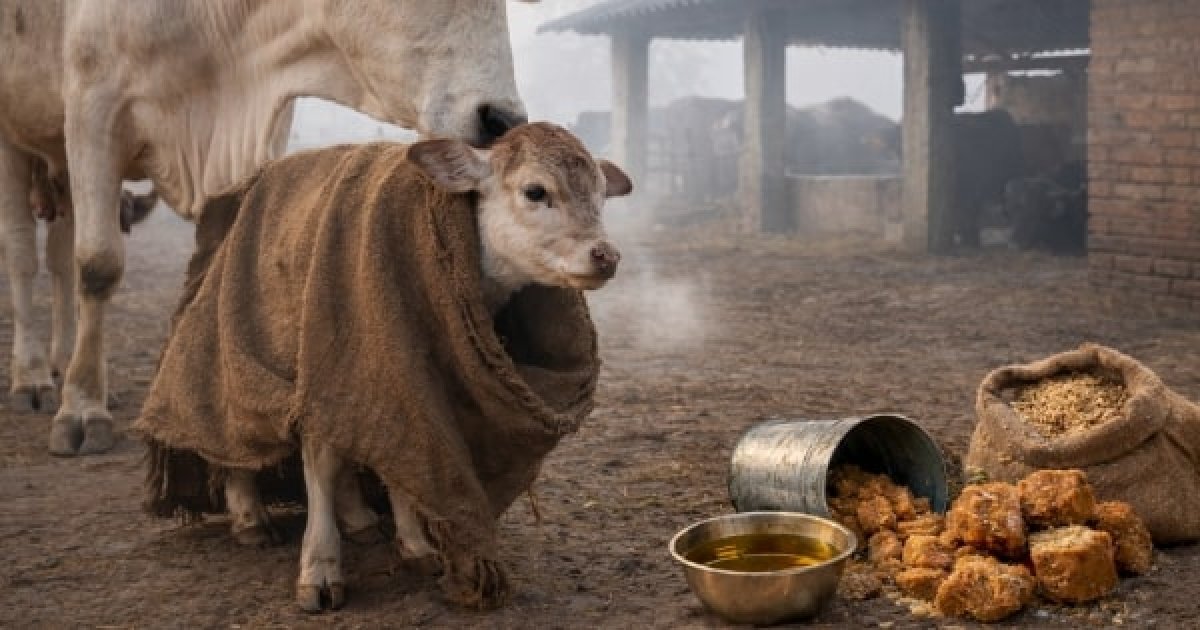

Why does calf mortality increase in winter? 72-hour survival rate.
In winter, calf mortality increases due to hypothermia, dehydration, and pneumonia. Learn about the 72-hour veterinary life-saving protocol.
Introduction – A Silent Winter Crisis in Dairy Farms
Every winter, thousands of newborn calves die within the first few days of life across rural dairy farms. Most farmers accept this as “weak calf” or “bad luck”, but in reality it is a preventable physiological disaster. Field veterinary experience shows that over 70% of winter calf deaths are caused by a deadly triad of hypothermia, dehydration and pneumonia.
Why Newborn Calves Are Extremely Vulnerable to Cold
A newborn calf has very limited brown fat reserves, thin skin and an immature temperature-regulation system. When environmental temperature drops below 10°C, the calf cannot maintain its normal body temperature (101.5–102.5°F). Once body temperature falls below 100°F, metabolic functions begin to fail.
The Three Silent Killers of Winter Calf Mortality
1. Hypothermia – The Silent Cold Shock
Low body temperature reduces enzyme activity, slows glucose metabolism, weakens heart function and suppresses immunity. If hypothermia continues for more than 6–12 hours, multi-organ failure may occur.
2. Dehydration – The Hidden Danger
Cold stress reduces milk intake. Reduced milk → dehydration → thickened blood → kidney and brain damage. Dehydration greatly worsens hypothermia.
3. Pneumonia – Winter Respiratory Threat
Cold damp floors, direct cold air drafts and suppressed immunity lead to pneumonia caused by Pasteurella, Mycoplasma and E. coli, significantly increasing mortality.
Differential Diagnosis
- Failure of colostrum intake
- Neonatal septicemia
- Navel ill
- Congenital weakness
- Viral enteritis
The 72-Hour Veterinary Life-Saving Protocol
Environmental Management
• Keep calf in a dry, draft-free shed
• Dry the calf immediately after birth
• Wrap in clean gunny bag or blanket
Energy and Fluid Support
• Warm water with 20–30 g jaggery twice daily
• Ensure colostrum feeding within 2 hours of birth
Thermal Recovery
• Gentle mustard oil massage on chest, abdomen and limbs
• Keep legs and belly warm at all times
Danger Signs – Call Your Veterinarian Immediately
• Cold ears and limbs
• Refusal to suckle
• Rapid or difficult breathing
• Nasal discharge or coughing
Conclusion
Winter calf deaths are not fate. They are the result of cold stress and poor early management. By following this 72-hour veterinary protocol, more than 80% of calf deaths can be prevented.