Water and animal husbandry: The foundation of milk production, health, and animal welfare.
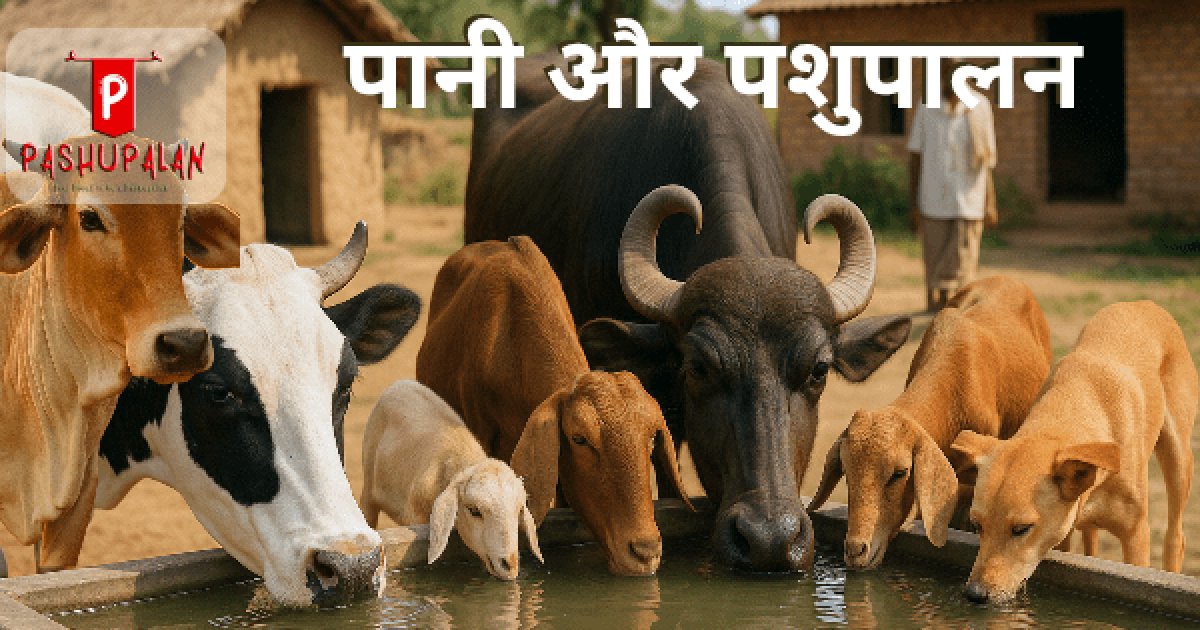

Water: Basis of Milk & Health
How important is water for livestock? Learn about the role of water in milk production, digestion, heat management, health, and disease prevention. A comprehensive guide for livestock farmers.
Water and Animal Husbandry – Why is it essential for milk production, health, and life?
Water is the basis of life for every living being, but its importance is multiplied many times over in animal husbandry.
All domesticated animals such as cows, buffaloes, goats, sheep, camels, horses, dogs, and cats are not only dependent on water, but their productivity, health, digestive power, body temperature, milk quality, and lifespan all depend on adequate water intake. Many livestock farmers believe that fodder and nutrition are the most important factors, but the reality is that water is even more important than feed. An animal can survive for 2-3 days without food, but not without water. In this blog, we will understand how essential water is for animals, what diseases its deficiency can cause, and how livestock farmers can best manage water resources.The Role of Water in the Animal Body
• 55–65% of a cow's body is water. • Approximately 87% of milk is water. • The digestive system depends on water. • Water plays a key role in regulating body temperature. • Blood circulation, hormone balance, and muscle function are all dependent on water. In short, without water, animals cannot eat, digest food, or stay healthy.Milk Production and Water – A Direct Correlation
Milk itself contains 87% water, so the more milk a cow/buffalo produces, the more water it will need. Estimate: • For every liter of milk produced, an animal needs approximately 4–5 liters of water. Example: If a buffalo is producing 10 liters of milk, it will need approximately 40–50 liters of water per day.How Much Water Do Cows and Buffaloes Need?
Cow: 35–50 liters per day (depends on milk production and weather) Buffalo: 40–70 liters per day (buffaloes drink more water) (because their body temperature remains high) Calves/Heifers: 10–20 liters Dry cows: 20–30 litersWater requirements double in summer
In high temperatures (above 40°C):
• Animals sweat more
• Breathing becomes faster
• Water deficiency immediately causes stress
Therefore, shade, cool water, and frequent watering are essential in summer.
Goats and sheep — animals that can survive on less water but are sensitive
Goats and sheep are ruminants and generally drink less water than cows/buffaloes.
Goats: 6–10 liters per day
Sheep: 4–6 liters per day
However, the quality of their water is very important.
Contaminated water causes diarrhea, worms, and digestive disorders in goats and sheep.Camels — The Desert's Water Warriors
Camels can survive for many days without water, but this doesn't mean they have a low water requirement. • Can drink 40–60 liters of water at a time • Can raise their body temperature up to 41°C in the heat to conserve water The camel's water management is a unique chapter in animal husbandry, but even they need clean water at regular intervals.Dogs and Cats — Pets, Yet Highly Sensitive
The water requirements of dogs and cats depend on their age, size, and activity level. Dog: 50–70 ml of water per kilogram of body weight Cat: 40–60 ml per kilogram If you have a 20 kg pet dog, it needs 1–1.4 liters of water per day.Contaminated Water — Poison for Animals
The biggest mistake a livestock farmer makes is: "If the water looks clean, it's fine." But often the water contains: • Bacteria • Parasites • Chemicals • Sewage/well contamination • Soil particles which cause serious diseases in animals.Major Diseases Caused by Water Scarcity
1. Heatstroke — especially in buffaloes 2. Ketosis 3. Constipation / Indigestion 4. Reduced milk production 5. Dehydration 6. Body aches / Muscle stiffness 7. Kidney problems8. Loss of appetite
9. Weakness and death in calves
How to tell if an animal is dehydrated?
• Dry nose
• Sunken eyes
• Loss of skin elasticity
• Weakness when standing
• Excessive thirst
• Sudden decrease in milk production
Water and Fodder Balance
Animals require more water when consuming dry fodder (hay, grains). Feeding green fodder reduces the need for water slightly, but water is still essential.
Fodder + Water = Digestion
Fodder – Water = Indigestion / Constipation
Water is extremely important for calves and young animals
People often don't give water to calves during the first 2-3 weeks after birth. This is a fatal mistake.
A calf needs water in addition to milk. Rule: Provide clean water daily after 3-4 days.
How to manage water supply in animal enclosures?
• Keep water in the shade
• Clean the tank/container daily
• Prevent algae growth
• Provide cool water in summer and slightly lukewarm water in winter
• Water should always be *freely accessible*
Water Pollution — A threat to livestock farmers