Trigeminal-mediated headshaking – a mysterious head-shaking disorder in animals and its treatment.
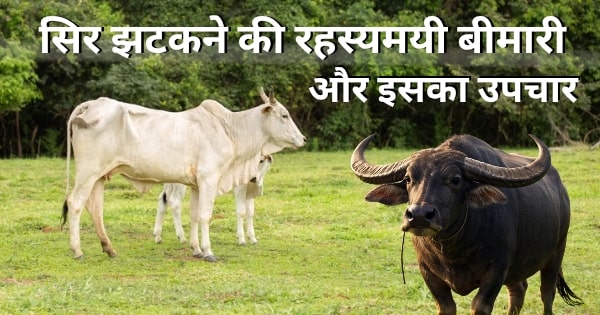

Headshaking: A Mysterious Disorder
Head shaking in animals is not always due to ear parasites; trigeminal-mediated headshaking is a neurological disorder involving hypersensitivity of the nerve that supplies the face.
Summary: This detailed article provides a comprehensive introduction to a unique and lesser-known neurological disease in animals – trigeminal-mediated headshaking. It differentiates this condition from common causes of head shaking and explains its main symptoms, potential causes, diagnosis, research, treatment, and management strategies in simple Hindi. The article alerts livestock owners and animal lovers that this head-shaking behavior may not simply be due to insect infestation or ear problems, but could be a deeper neurological disorder. Timely consultation with a veterinarian and appropriate management are crucial for the animal's quality of life.
1. Introduction: Potential Causes of Head Shaking
Livestock owners often observe that cows, buffaloes, or horses sometimes shake their heads. The most common causes are mosquitoes or flies entering the ear, mite infestation in the ear, ear wounds, dental or mouth problems, or simple irritation. In all these situations, the animal shakes its head or ears for a short time, and the behavior returns to normal once the problem is resolved.
However, in some cases, the animal repeatedly shakes its head vigorously throughout the day or seasonally, without any apparent external cause. It rubs its nose against the wall or ground, sneezes repeatedly, or tries to hit its face with its front legs. Such animals often appear restless, stressed, and sometimes aggressive. This condition could be trigeminal-mediated headshaking.
2. Introduction to the Trigeminal Nerve: The Body's Cable Network
The trigeminal nerve is the largest sensory nerve in the face of both humans and animals.
This nerve originates from the base of the brain and divides into three main branches – ophthalmic (around the eye), maxillary (in the upper jaw, nose, and cheeks), and mandibular (in the lower jaw and ear). This nerve carries sensations from the skin, muscles, teeth, sinuses, ears, and mouth to the brain.This characteristic of the nerve makes it so important that even a slight disease or infection in it can cause severe pain, burning, or tingling in the face, ears, and head. In humans, a disease of this nerve is called "tic douloureux" or trigeminal neuralgia, in which even a light breeze or touch can cause knife-like pain. Similarly, in animals, hypersensitivity of the trigeminal nerve leads to the development of headshaking syndrome.
3. How does this disease develop? Possible causes
The exact cause of trigeminal-mediated headshaking remains a subject of research. Scientists have attributed it to "sensory nerve hyperexcitability," i.e., hypersensitivity of the nerve. According to current understanding, changes in control signals from the brain, inflammation around the nerve, or neurochemical changes in the nerve increase this hypersensitivity. It is also possible that the myelin (insulation) inside the nerve is damaged, making the neurons easily excitable.
Some possible factors that have been discussed in research include:
- Daily and seasonal effects: Many animal owners report that the problem is more prevalent in summer and less so in winter. Ultraviolet (UV) light from sunlight and strong winds, pollen, or dust can also be triggers.
- Hormonal changes: In horses, this condition has been observed to be somewhat more common in male horses (geldings), and changes in hormone levels may influence it.
- Previous infections or allergies: Some research has found that animals with herpes viruses or allergies like asthma may have increased nerve sensitivity.
- Pain pathway reorganization: Chronic ear, tooth, or facial pain can keep nerve pathways active for so long that the body's "pain memory" is heightened, and even minor stimuli now trigger significant pain.
4. Comprehensive Description of Symptoms
If you suspect trigeminal-mediated headshaking in an animal, pay attention to the following symptoms. Not all symptoms will be present in every animal, but the main signs are as follows:
- Regular, recurrent head shaking: This shaking is usually rapid and jerky in a vertical (up-and-down) direction, but in some animals, it may be back and forth or side to side.
- Irritation of the nose and face: The animal suddenly rubs its nose on the ground or its legs, flares its nostrils, sneezes repeatedly, or twitches its lips, as if something is biting it.
- Effects on the eyes and ears: Some animals blink or twitch their ears. If the ophthalmic branch of the nerve is affected, they may experience sensitivity to light (photic headshaking).
- Increased symptoms with exercise and stress: Symptoms worsen during exercise, in sunlight, or in strong winds. In some animals, the twitching intensifies even while eating, perhaps due to increased blood flow stimulating the nerves during this time.
Mental imbalance: Due to the constant pain, the animal may become irritable, showing changes in temperament, aggression, or depression.
The severity of the symptoms can range from mild to severe. In mild cases, the head twitches only occasionally, and the animal performs other activities normally, while in severe cases, the animal is so restless that it has difficulty grazing or suckling. This also causes obstruction.
5. Differentiation from other diseases
Because there are many common causes of head shaking, it is important to rule out other diseases before making a correct diagnosis. The veterinarian will check for the following problems:
- Ear parasites or ticks: Spinose ear ticks such as Otobius megnini attach to the ear canal, causing inflammation and head shaking. This can be easily detected by visual examination under light or by taking a swab.
- Ear inflammation (otitis): Bacterial (e.g., Mycoplasma bovis) or fungal infections can cause inflammation, pain, pus, and head tilting in the ear. In such cases, a foul odor, pus, or drooping of the ear may be observed.
- Dental or oral problems: Broken teeth, molar infections, mouth ulcers, or thorns can also cause the animal to shake its head and rub its nose.
- Sinusitis or nasal bots: In some sheep and goats, head shaking and nose rubbing are observed due to botfly larvae (Oestrus ovis) inside the nose.
- Neurological/metabolic diseases: Diseases such as hypocalcemia (milk fever), listeriosis, lead poisoning, or brain inflammation can also present with symptoms of head shaking, muscle tremors, or head tilting.
An experienced veterinarian will consider all these possibilities in turn before diagnosing trigeminal-mediated headshaking.
6. Tests used in confirming the disease
Since there is no specific laboratory test for this disorder, it is called a diagnosis of exclusion. However, the doctor uses some tests:
- Complete physical and neurological examination: The animal's general behavior, balance, vision, hearing, and facial responses are observed. This clarifies whether the problem is limited to head shaking or if other nerves are also affected.
- Ear Otoscopic Examination: A special instrument is used to examine the ear canal, eardrum, and tissues inside the ear. This reveals inflammation, parasites, or pus.
- Blood and Serum Tests: Calcium, magnesium, hormone levels, liver and kidney function, etc., are checked to rule out metabolic diseases.
- Imaging (CT/MRI): In severe or unclear cases, a CT or MRI scan of the head is performed to detect injuries, tumors, sinusitis, or other structural problems. This test can be expensive but provides detailed information about the nerves, teeth, and bones.
- Nerve Block Test: Some specialists temporarily disable a specific branch of the trigeminal nerve with a local anesthetic (lidocaine, etc.). If the head shaking stops afterward, it confirms that the problem is related to that specific branch.
7. Treatment Options
Unfortunately, there is currently no complete or permanent cure for trigeminal-mediated headshaking. However, various treatment and management strategies can be combined to control or reduce symptoms in many animals.
7.1 Environmental and Behavioral Measures
- Protective Nets or Face Masks: Nose nets and UV-protective masks are available for horses and cows. These can provide some protection from wind, dust, insects, and bright sunlight, reducing nerve irritation. Many owners have reported that wearing a net reduced their horses' headshaking episodes by 50–70%.
- Regular Feeding and Exercise: In some animals, symptoms worsen with an empty stomach or sudden strenuous exercise. Therefore, a balanced diet and a gradually increasing exercise program are helpful.
- Keeping the environment calm: Keeping the animal in a shady, quiet place during strong winds, bright light, and high pollen counts can reduce symptoms.
7.2 Nutritional Measures
Some research has found that slightly higher levels of magnesium and boron in the diet reduce nerve excitability. This is because magnesium calms the nervous system and boron improves the calcium-magnesium balance.
However, excessive minerals can also cause toxicity, so do not use this without the advice of a veterinarian or animal nutritionist. Including alfalfa, high-quality hay, and low-grain feed (which lowers pH) in the diet may be beneficial.
7.3 Medicinal Treatment
Several medications developed for nerve pain and epilepsy in humans have been used for headshaking in animals.
- Gabapentin and Pregabalin: These medications reduce nerve hyperexcitability and provide pain relief. Significant improvement has been seen in some horses with gabapentin given twice daily, but it was ineffective in others.
- Carbamazepine and Oxcarbazepine: These are anticonvulsant medications that regulate nerve firing. They can have side effects such as drowsiness and elevated liver enzymes, so they should only be given under veterinary supervision.
- Sertraline and Cyproheptadine: These are antihistamine and anti-serotonin medications. Some studies have shown slight improvement in symptoms with these drugs as they address allergies and neurotransmitter imbalances.
- Tricyclic Chlorpheniramine: This insecticide was used in some older case reports, but due to its toxic effects, it is now rarely used.
The choice of medication, dosage, and duration depends on the animal's weight, the severity of symptoms, and other health conditions. Often, a combination of two or three medications provides relief. Before starting any medication, it is essential to discuss blood tests and potential side effects with a veterinarian.
7.4 Surgical and Neuromodulation Treatments
In very severe cases where all other measures have failed, some owners have opted for surgical or neuromodulation treatments.
- Infraorbital Nerve Block and Neurectomy: In the past, the infraorbital nerve in the upper jaw of horses was surgically cut to stop nerve pain signals. However, this has serious side effects such as facial numbness and loss of muscle control, so it is rarely performed nowadays.
- Peripheral Nerve Stimulation (PNS): This is a new technique in which a small electrode is implanted near the nerve, which sends regular mild electrical impulses to disrupt the nerve's pain signals. This technique has been successful in some human patients, but research is still ongoing in animals.
8. Current State of Research
Significant research has been conducted on trigeminal-mediated headshaking over the past two decades, particularly in horses. American and European universities have conducted studies to measure nerve sensitivity, assess pain intensity, and test new medications.\n\nScientists at UC-Davis have shown that in some horses, the firing threshold of the trigeminal nerve is ten times lower than in normal horses:contentReference[oaicite:0]{index=0}. This means that even a light breeze or a gentle touch can cause intense pain. They also report that in approximately 60% of cases, symptoms are more pronounced in the summer and less so in the winter. The reason for this nerve hypersensitivity is still unclear. Some studies are focusing on viral infections, autoimmune reactions, hormonal imbalances, conditions like migraines, and genetic predisposition. In the coming years, it is hoped that new research will provide us with better diagnoses and treatments.
9. A Hypothetical Case Study
Gaurav is a cattle farmer from Rajasthan who owns 15 buffaloes. Last July, he noticed that one of his five-year-old buffaloes, which usually produced 10 liters of milk daily, suddenly started shaking its head violently. It would repeatedly move its head up and down, rub its nose, and sometimes suddenly stop chewing its cud, not only during milking but also while resting. Gaurav thought that perhaps something had gotten into its ear. He cleaned the animal's ears, but the problem persisted. He then called the nearest veterinarian. The doctor examined the inside of the ear, but found no mites or pus. Blood tests showed normal calcium and magnesium levels. A CT scan also revealed no sinusitis or tumors. Finally, the doctor blocked the infraorbital branch of the trigeminal nerve with a local anesthetic. Surprisingly, the buffalo stopped shaking its head for a few hours after the injection. This confirmed the syndrome. Since there was no permanent cure, the doctor gave Gaurav some management advice – such as administering gabapentin twice a day, avoiding exposure to sunlight, using a mesh over the nose, and providing a balanced diet with alfalfa. In the initial few weeks, there was not much difference in the symptoms, but gradually the head shaking decreased, and after three months the buffalo was almost back to normal.
Occasionally, she would experience a mild episode on a hot day, but now she is producing milk normally. This case demonstrates that with correct diagnosis, patience, and a combination of different approaches, animals can find relief.10. Suggestions for Livestock Owners
• Be patient: This problem does not resolve suddenly. The effects of medication and management are seen gradually.
• Consult a veterinarian immediately: Do not ignore headshaking. Rule out the possibility of ear, dental, or other infections first.
• Adopt a multi-pronged approach: A combination of nutrition, environment, medication, and behavioral changes yields better results.
• Maintain daily records: Note when and under what circumstances the headshaking increases. This will help the doctor identify the triggers.
• Pay attention to the animal's mental health: Prolonged pain can lead to depression or aggression in the animal. Love, care, and a calm environment provide relief.11. Conclusion
Trigeminal-mediated headshaking is a complex and challenging disease that causes concern not only for the animal but also for the owners. Research on its causes and treatment is ongoing, but we already know that it should not be taken lightly. Timely diagnosis, ruling out other potential causes, and comprehensive management strategies can significantly control the symptoms in most animals. Raising awareness about this disease and sharing accurate information will help livestock owners and provide relief to the animals from pain.