Organic animal husbandry – towards chemical-free milk production
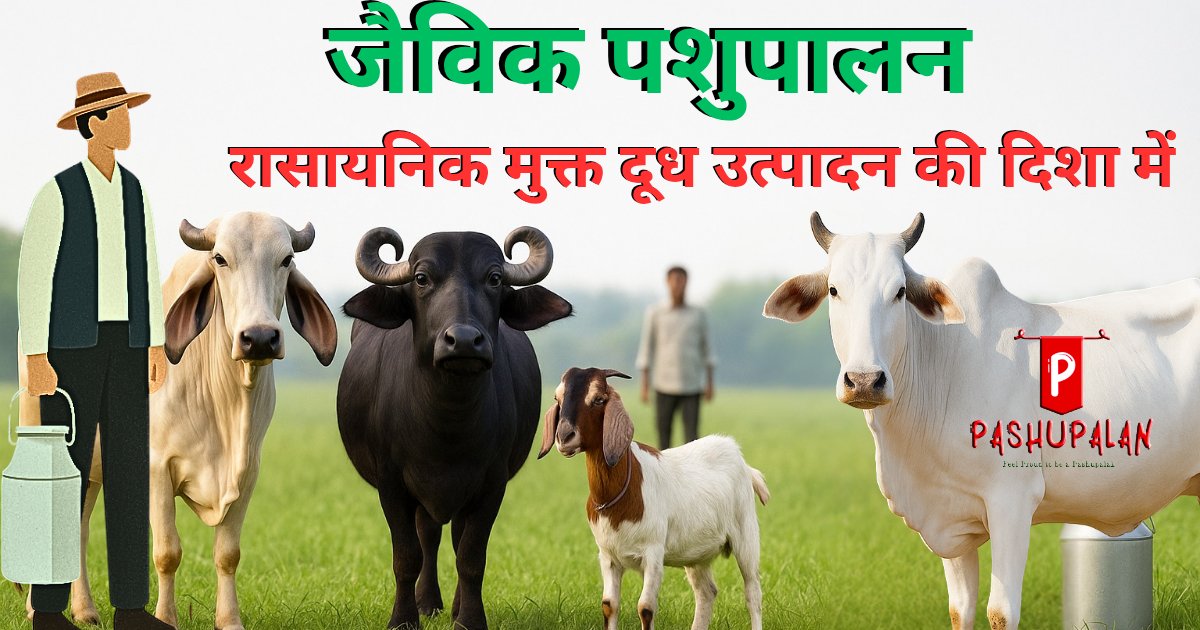
Organic Dairy: Chemical-Free Milk
Learn what organic animal husbandry is, how animals are given natural feed and herbal treatments, and how it is a profitable model for farmers to produce chemical-free milk.
Organic Animal Husbandry – Towards Chemical-Free Milk Production
Today, when the world is grappling with the harmful effects of chemical fertilizers and artificial medicines, organic animal husbandry is emerging as a new ray of hope. It is a boon not only for the environment but also for the health of both animals and consumers. In India, a country deeply rooted in the tradition of cows and livestock, organic animal husbandry is not just a technique but a culture.
🐄 1. What is Organic Animal Husbandry?
Organic animal husbandry means keeping animals in a natural environment and avoiding the use of any chemical substances in their diet, treatment, and care.
In this method, every aspect of the animal is balanced according to the laws of nature.- No artificial hormones or antibiotics are used.
- The feed does not include crops grown with chemical fertilizers or pesticides.
- Animals are provided with ample open space, sunlight, and green fodder.
- Only herbal, Ayurvedic, and Panchagavya-based medicines are given for treatment.
In this method, the physical, mental, and natural health of the animal is the priority.
🌾 2. Why is Organic Animal Husbandry Necessary?
Today, the increasing use of chemicals and antibiotics in milk production is affecting both the quality of milk and the health of consumers.
Main Reasons:
- Harmful adulterants in milk such as urea, detergents, and oxytocin.
- Excessive use of animal medicines and hormone injections.
- Deterioration in soil and water quality, which reduces the nutritional value of fodder.
In these circumstances, organic animal husbandry not only makes milk chemical-free but also protects both the life of the animal and the income of the farmer.
🌱 3. Basic Principles of Organic Animal Husbandry
- Natural Diet: Green fodder, grains, bran, oilcake, pulse husks, and herbal mixtures.
- Natural Treatment: Panchagavya, neem, turmeric, basil, giloy, and ashwagandha.
- Animal Welfare: Clean shed, shade, sunlight, water, and open pasture.
- Balanced Breeding: Avoidance of artificial hormones; Only natural mating or bio-secure artificial insemination.
- Environmental balance: Cow dung and urine are used as organic fertilizer in the fields.
🍀 4. Key Herbal Components Used in Organic Animal Husbandry
1. Panchagavya:
Panchagavya, made from cow's milk, curd, ghee, urine, and dung, is a wonderful organic medicine. It increases immunity and improves digestion when mixed with fodder.
2. Neem and Tulsi:
Neem has disinfectant properties while Tulsi helps prevent infections. Extracts or powders of both can be mixed with fodder.
3. Giloy and Ashwagandha:
Giloy increases immunity and Ashwagandha reduces stress in animals.
4. Turmeric:
Turmeric is a natural antibiotic that helps in wound healing.
🌿 5. Fodder Management in Organic Animal Husbandry
The biggest basis for the success of organic animal husbandry is "fodder". Because as is the food, so is the health.
Green Fodder:
- Sorghum, Berseem, Napier grass, Rye-oat mixture.
- Moringa (drumstick) and Subabul leaves are excellent sources of protein.
Dry Fodder:
- Making paddy straw usable through urea treatment.
- Converting maize and wheat stalks into silage.
Supplementary Feed:
Homemade recipe: 1 kg bran + 100 grams oilcake + 20 grams jaggery + 10 grams neem powder + 5 grams fenugreek powder.
This mixture acts as a natural tonic for milk-producing animals.🐃 6. Organic Treatment System – An Alternative to Chemical Medicines
Home Remedies for Common Diseases:
| Disease | Natural Treatment |
|---|---|
| Bloating | 50ml mustard oil + 100ml water |
| Indigestion | Carom seeds + ginger decoction |
| Wounds | Turmeric + neem oil paste |
| Itching | Boiled neem leaf water for bathing |
| Udder inflammation | Ice pack + turmeric oil |
In the organic method, an attempt is made to find a natural solution to every problem to reduce dependence on medicines.
🌾 7. Structure of an Organic Dairy Farm
- The cowshed should be made of brick or mud, with open ventilation.
- The enclosure floor should be made of mud or interlocking tiles.
- The water drain should slope outwards.
- The grazing area should be rotated every 15 days.
- At least 10x10 feet of open space for each animal.
💰 8. Economic Benefits of Organic Livestock Farming
Organic milk and its products (A2 milk, ghee, paneer, Panchagavya, etc.) are in high demand in the market. The price of milk can be 30–50% higher than conventional milk.
Main Benefits:
- The average lifespan and production period of the animal increases.
- Costs are reduced as the need for medicines and chemical feed decreases.
- Additional income can be generated by preparing organic manure and pesticides from cow dung and urine.
🌍 9. Organic Animal Husbandry and the Environment
- Cow dung improves soil quality.
- Cow urine is used to make natural pesticides.
- Methane gas emitted by animals is used in biogas, reducing environmental pollution.
- Grazing leads to the biological regeneration of the land.
Thus, organic animal husbandry is not just animal-based farming, but a process of environmental balance.
🧭 10. Examples of Organic Animal Husbandry in India
- Sabar Dairy (Gujarat): 500+ dairy farmers are adopting organic fodder and herbal treatments.
- Nandi Dairy (Karnataka): Producing A2 milk without chemicals.
- Sikar and Jhunjhunu, Rajasthan: Many farmers are running natural dairies using the Napier + Moringa model.
🌺 11. Future Direction – “Organic Milk Mission”
The Government of India and several state governments are now launching schemes like the Organic Milk Mission to promote chemical-free milk in the country.
- Grants for organic dairies by NDDB and NABARD.
- Training by ICAR and Krishi Vigyan Kendras.
- Promotion of A2 milk under the “One District One Product” scheme.
🔚 Conclusion
Organic animal husbandry is not just a method of milk production, but a lifestyle of “sustainable dairy”. This is not only a way to increase farmers' income, but also a guarantee of consumer health, environmental balance, and a safe future for coming generations. Remember – “If the fodder is organic, the animal is healthy, and the milk is chemical-free, then that is true animal husbandry.”
✍️ Author: Dr. Mukesh Swami (Veterinarian and Editor – Pashupalan.co.in)