Mineral Mapping in Dairy Farming: A Scientific Approach to Hidden Mineral Deficiencies
Mineral Mapping in Dairy Farming: A Scientific Approach to Hidden Mineral Deficiencies
Hidden mineral deficiencies reduce milk yield and fertility in cattle. Learn how Mineral Mapping helps farmers plan accurate nutrition for better results.
What is Mineral Mapping and Why is it Important in Dairy Farming?
Many times we say – “Everything seems fine, yet milk yield is low, heat is irregular, or pregnancy fails repeatedly.” In most such cases, the problem is not disease, but mineral imbalance.
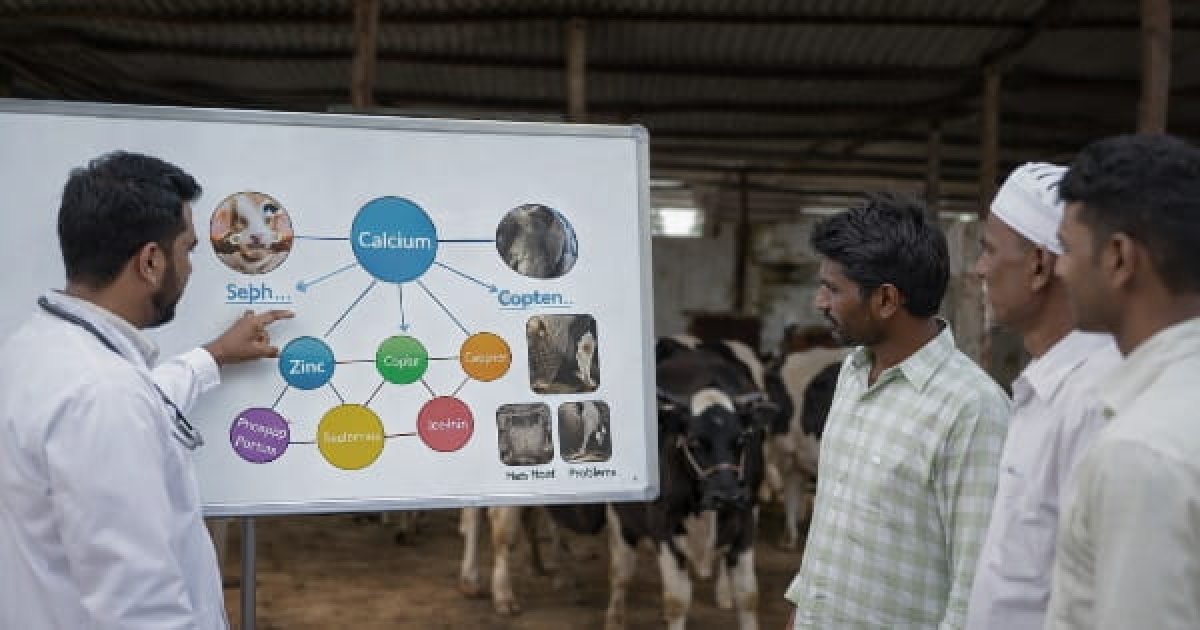
Mineral Mapping means identifying which minerals are deficient, excess, or imbalanced in a specific area, farm, and animal – and correcting them in a planned manner.
Why is Mineral Mapping Necessary?
Soil, water, and fodder quality vary from region to region. That is why one common mineral formula does not work everywhere.
With proper Mineral Mapping, you can:
- Reduce repeat breeding problems
- Improve timely heat expression
- Stabilize milk production
- Improve calf growth and vitality
- Reduce unnecessary medicine expenses
Common Signs of Mineral Deficiency
If your animals show these signs, Mineral Mapping is required:
- Repeated heat but failure to conceive
- Abortions or weak calves
- Sudden drop in milk yield
- Hoof problems and weak bones
- Abnormal licking of walls, soil, or dung
- Dullness and rough hair coat
How to Do Mineral Mapping? (Step-by-Step)
Step 1: Area-Level Assessment
Understand the soil, water, and fodder pattern of your area. Often, animals in the same village show similar mineral deficiencies.
Step 2: Animal-Level Observation
Record age, milk yield, body condition score (BCS), reproductive history, and health status of each animal.
Step 3: Blood or Feed Analysis (Where Possible)
Laboratory testing of blood or fodder gives a clearer picture of mineral status.
Step 4: Targeted Mineral Plan
Instead of giving the same mineral mixture to all animals, prepare a region-specific and animal-specific plan.
Important Minerals and Their Role
- Calcium & Phosphorus – Bones, milk production, calving
- Copper – Heat cycle, hair coat quality
- Zinc – Hoof health, skin, immunity
- Selenium – Conception, muscle function
- Iodine – Thyroid function, calf growth
- Cobalt – Vitamin B12 synthesis and energy metabolism
Dangers of Incorrect Mineral Feeding
The belief “more minerals will give faster results” is dangerous.
- Excess copper can damage the liver
- Too much calcium can suppress heat cycles
- Mineral interactions can block absorption of other nutrients
Therefore, mineral supplementation without mapping can cause harm instead of benefit.
Practical Mineral Plan for Small Farmers
- One basic mineral profile for one village
- Separate plans for lactating and dry animals
- Special focus plan for repeat breeders
- Review and correction every 90 days
Mineral Mapping + Structured Farm Profile = Sustainable Results
True improvement is seen only when Mineral Mapping is combined with a Structured Farm Profile.
More important than treatment is correcting nutrition by understanding the root cause.
Conclusion
Mineral Mapping is not an expensive technology; it is a scientific way of thinking.
Right mineral, right quantity, right animal – this is the key to successful dairy farming.
Less medicine, more understanding – that is the sustainable solution.