Why is Milk Production Decreasing in Cows and Buffaloes? – 7 Major Mistakes by Dairy Farmers and Scientific Solutions
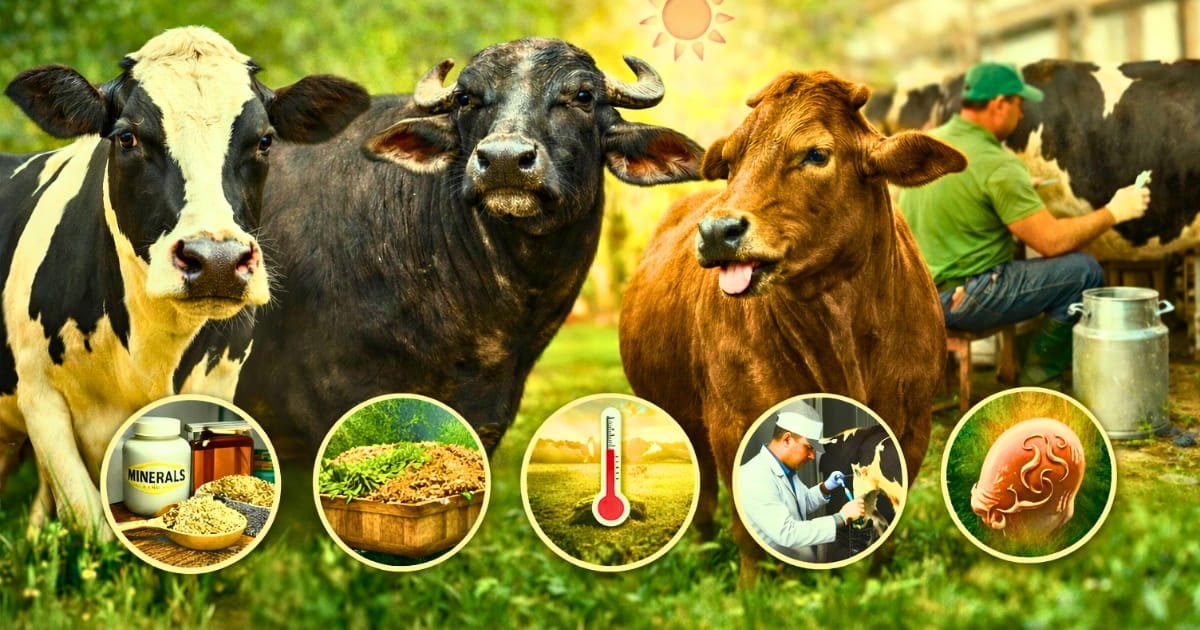

Why Milk Production is Decreasing? 7 Real Causes & Scientific Solutions
Why milk production is decreasing in cows and buffaloes? Learn the 7 real causes and scientific ways to increase milk yield for profitable dairy farming.
India is the largest milk-producing country in the world. In villages across the country, millions of families earn their livelihood by raising cows and buffaloes. However, in recent years one problem has become very common among dairy farmers – the gradual decline in milk production of their animals. Many farmers say that a cow that used to give 10–12 liters of milk earlier now produces only 6–7 liters, and some animals are not even giving the expected production.
This problem does not have just one cause. In most cases several small mistakes together affect milk production. Unfortunately, many farmers fail to understand these reasons and sometimes blame medicines, sometimes the breed, and sometimes even luck.
In reality, if dairy farming is practiced scientifically, milk production can be improved significantly. Based on the experience of veterinary professionals, it has been observed that in many cases simply improving management practices can increase milk production by 20–40 percent.
In this article we will understand in detail the major causes of low milk production in cows and buffaloes and how these problems can be corrected.
Current Situation of Dairy Farming in India
The dairy sector in India is considered the backbone of the rural economy. Millions of small and marginal farmers keep two to five animals and sell milk to increase their household income.
However, dairy farming today faces several challenges:
• Increasing cost of fodder
• Mineral deficiency
• Reproductive problems
• Heat stress
• Increasing disease risks
• Lack of proper technical guidance
All these factors directly affect milk production. Therefore, it is important for farmers to understand these issues and adopt scientific solutions.
Cause 1 – Mineral Deficiency
The most common and significant reason for reduced milk production in cows and buffaloes is mineral deficiency. Many farmers feed animals green fodder, straw or concentrate feed but forget to provide mineral mixture.
The body of dairy animals requires minerals such as calcium, phosphorus, copper, zinc, cobalt and several other trace elements. If these nutrients are not supplied adequately in the diet, the animal’s metabolism gets affected and milk production begins to decline.
Common symptoms of mineral deficiency include:
• Gradual decline in milk yield
• Irregular heat cycles
• Difficulty in conception
• Weak body condition
• Rough and dull hair coat
The solution is to provide balanced mineral mixture regularly. Generally, feeding 50 to 100 grams of mineral mixture daily can improve both the health and productivity of dairy animals.
Cause 2 – Lack of Balanced Nutrition
Many farmers believe that if an animal is fed enough fodder to fill its stomach, it will produce sufficient milk. However, simply filling the stomach is not enough; the diet must also be nutritionally balanced.
A balanced ration should include:
• Green fodder
• Dry fodder
• Concentrate feed mixture
• Mineral mixture
• Clean drinking water
If an animal is fed only straw or only green fodder, it does not receive adequate energy and protein. This directly affects milk production.
A general rule is that approximately 1 kg of balanced concentrate feed should be provided for every 2–2.5 liters of milk produced.
Cause 3 – Heat Stress
In warm countries like India, heat stress is a major challenge for dairy animals. When temperatures rise above 35°C, animals spend more energy regulating their body temperature.
As a result, animals consume less feed and milk production begins to decline.
Symptoms of heat stress include:
• Excessive panting
• Standing in shade most of the time
• Reduced feed intake
• Lower milk yield
Preventive measures include:
• Providing adequate shade in the animal shed
• Use of fans or cooling systems
• Continuous supply of clean drinking water
• Sprinkling water during hot afternoons
These measures help animals remain comfortable and support better production.
Cause 4 – Reproductive Problems
Reproductive disorders also influence milk production. If an animal does not conceive on time or remains open for a long period, the production cycle becomes irregular.
Common reproductive problems include:
• Anestrus (absence of heat)
• Repeat breeding
• Abortion
• Weak calf birth
These problems can often be managed through proper nutrition, mineral supplementation and timely artificial insemination.
Cause 5 – Hidden Diseases
Sometimes animals appear healthy externally but may suffer from hidden diseases that affect milk production.
Examples include:
• Subclinical mastitis
• Parasitic infections
• Digestive disorders
• Viral diseases
Therefore, periodic health checkups are essential. Regular vaccination and deworming can prevent many such issues.
Cause 6 – Poor Animal Management
Milk production does not depend only on feeding; management practices also play a very important role.
If the animal shed is dirty, water is not available properly or milking practices are poor, animals experience stress and milk production may decline.
Good management practices include:
• Clean and dry animal housing
• Regular sanitation
• Adequate space for animals
• Availability of clean drinking water
Cause 7 – Poor Quality Fodder
Sometimes animals are given sufficient fodder but its nutritional quality is poor.
Old or poor-quality fodder contains low nutrients and animals do not receive enough energy for milk production.
Good quality fodder sources include:
• Green fodder such as berseem, sorghum and maize
• Good quality dry fodder
• Use of silage
Such fodder provides balanced nutrition and can help increase milk yield.
10 Scientific Methods to Increase Milk Production
If dairy farmers adopt the following practices, significant improvement in milk production can be observed:
1. Provide balanced nutrition
2. Feed mineral mixture regularly
3. Ensure availability of clean drinking water
4. Protect animals from heat stress
5. Follow proper vaccination schedule
6. Conduct regular deworming
7. Maintain clean animal housing
8. Timely artificial insemination
9. Ensure supply of good quality fodder
10. Take regular advice from a veterinarian
Conclusion
Low milk production in cows and buffaloes is not caused by a single factor but is usually the result of multiple issues. If farmers understand these causes and adopt scientific dairy practices, milk production can be improved significantly.
Today there is a need to treat dairy farming not merely as a traditional activity but as a scientific enterprise. With the right knowledge, proper nutrition and effective management, dairy farming can become a highly profitable business.
If we prioritize the health and welfare of our animals and provide them with balanced nutrition and a comfortable environment, they will reward us with higher milk yield and better income.
Author:
Dr. Mukesh Swami
Senior Veterinary Expert & Founder – Pashupalan.co.in