How to Protect Livestock from Heatstroke During Summer: Simple and Essential Measures for Small-Scale Livestock Farmers

Easy Tips to Prevent Heat Stress
Discover simple measures to protect cows, buffaloes, and other livestock from heatstroke during the summer. Minimize heat stress and keep your animals healthy t
As summer begins, the biggest concern for livestock farmers is how to protect their animals from intense sunlight, hot winds, and water shortage. In many parts of India, including Rajasthan, temperatures rise so much from April to June that if proper precautions are not taken in time, animals can fall sick, produce less milk, and in some cases, their lives may even be at risk.
Heatstroke does not affect only humans; animals can also suffer severely from it. Milking animals, pregnant animals, young calves, old animals, and those tied in open areas are at greater risk. That is why every livestock farmer should adopt some simple but effective measures as soon as the summer season begins.
Common Signs of Heat Stress and Heatstroke in Animals
If an animal is breathing rapidly again and again, panting excessively, appearing dull, losing interest in feed, repeatedly standing up and sitting down, breathing with its mouth open, or if its body temperature seems high, these may be signs of heat stress. In milking animals, a drop in milk production is also a major sign of heat-related stress.
Proper Shade Arrangement Is the First Step
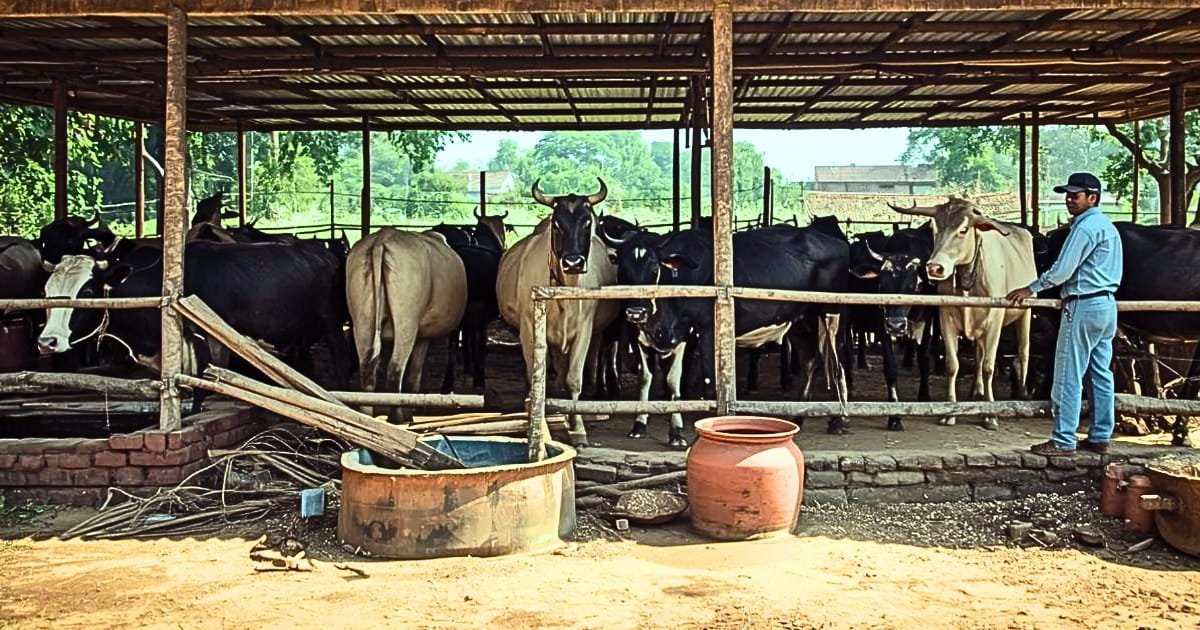
The easiest way to protect animals from heat is to provide good shade. If there is a permanent shed, that is excellent, but if not, tin sheets, tarpaulin, thatch, nets, or the shade of trees can also be used. Make sure the shed is well ventilated. Shade alone is not enough; proper air movement is equally important.
Where possible, light sprinkling of water on the roof of the shed can help reduce the inside temperature. However, there should not be mud and filth, otherwise other diseases may increase.
Clean and Cool Water Must Be Available at All Times
In summer, the water requirement of animals increases significantly. Many times, farmers provide fodder on time but do not pay enough attention to water quantity. This is a major mistake. Animals should get clean and fresh water several times a day. The water should not be too warm. If the tank or trough is kept in direct sunlight, it should be shifted to shade.
For milk-producing animals, shortage of water directly affects milk production. Therefore, water availability should never be taken lightly.
Avoid Green Fodder Handling or Heavy Work in the Afternoon
During extreme heat, animals should not be taken for long distances. If grazing is necessary, take them out early in the morning or in the evening. Keeping animals in direct sunlight during the afternoon can be harmful. Similarly, bathing, shifting tethering places, vaccination, or other activities should be avoided during peak heat hours.
Feed management also needs some attention. In very hot weather, animals tend to eat less heavy and dry fodder. At such times, balanced feed, green fodder, mineral mixture, and sufficient water are beneficial.
Simple Ways to Cool the Body
On very hot days, light sprinkling of water on the animal’s body can be helpful. Some farmers also use fans or coolers, especially in sheds for dairy animals. If that is not possible, then at least proper ventilation must be ensured.
Keep in mind that simply pouring water is not a complete solution. If an animal stays in a wet, closed, and poorly ventilated place, the problem may worsen. Therefore, both cooling and ventilation are necessary.
Take Special Care of Calves and Pregnant Animals
Young calves and pregnant animals are more sensitive to heat. They should be kept away from direct sunlight. There should be a separate clean, dry, and airy place for them. If they appear weak, a veterinarian should be consulted without delay.
When Should You Call a Veterinarian Immediately?
If an animal collapses, cannot get up, is panting very heavily, has drooling from the mouth, feels extremely hot, has dull eyes, or refuses to drink water, then there should be no delay. This may be a serious case of heat stress or heatstroke. In such a situation, move the animal immediately to shade, provide water, and contact a veterinarian.
Conclusion
Taking care of animals in summer is not a very difficult task, but a little negligence can cause major losses. Timely shade, clean water, balanced nutrition, protection from the afternoon sun, and early recognition of symptoms—these five things should be remembered by every livestock farmer.
A truly alert livestock farmer is the one who prepares before the weather changes. If animals remain healthy, milk production, reproductive performance, and overall income will all improve. Therefore, this summer, make the safety of your animals a priority.